
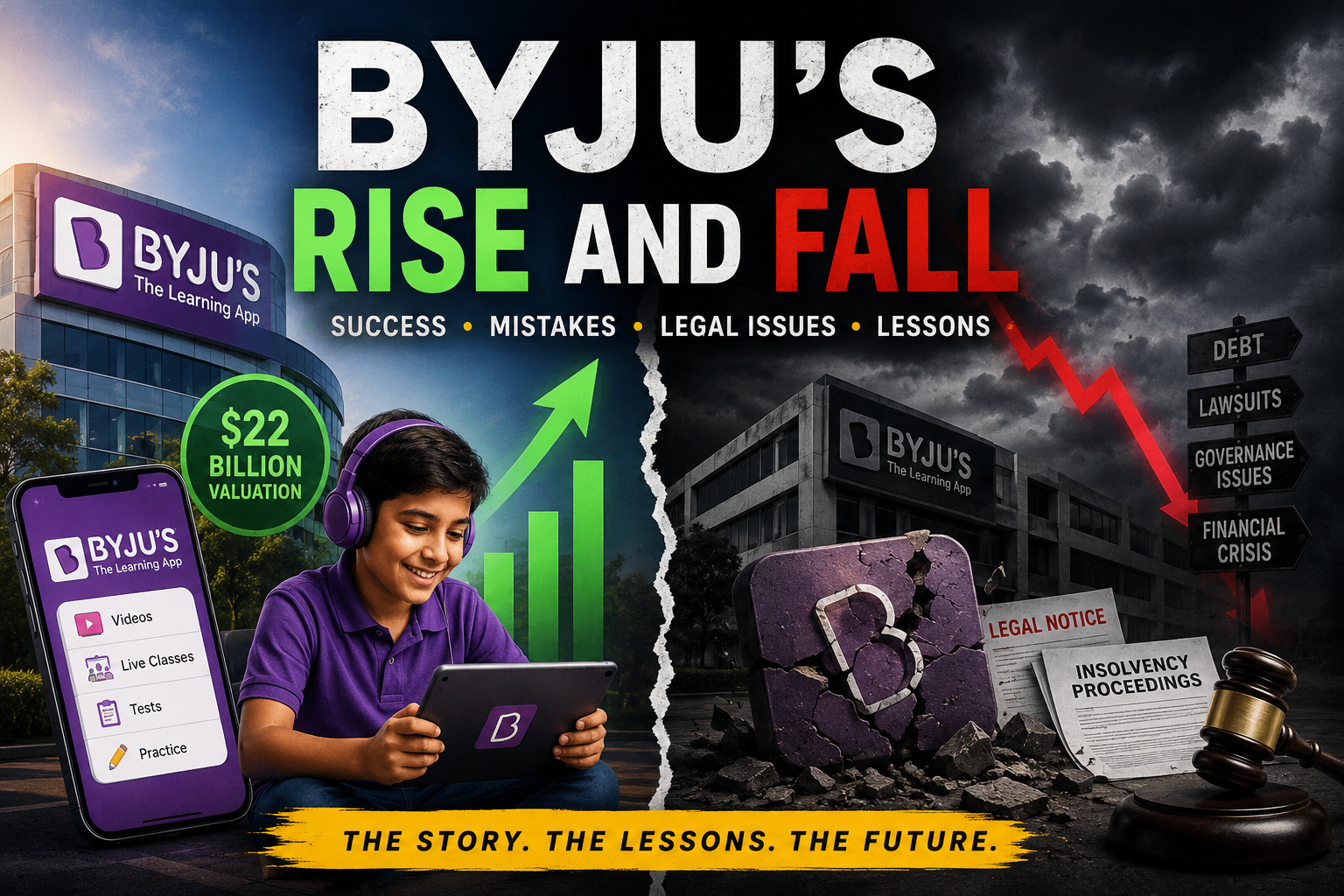
Byju’s Rise and Fall: For several years, Byju’s was considered one of India’s greatest startup success stories. The company transformed online education, attracted billions of dollars in investments, and became one of the world’s most valuable edtech companies.
However, rapid expansion, increasing debt, legal disputes, governance concerns, and financial challenges eventually led to one of the biggest corporate crises in India’s startup ecosystem. The company’s troubles also extended beyond India, with legal proceedings involving its Singapore-based entities.
This article explains what happened to Byju’s, why legal action was taken, the role of Singapore authorities, and the important business lessons every entrepreneur should understand.
Disclaimer: This article is for educational and informational purposes only and does not constitute legal or financial advice.
What is Byju’s?
Byju’s is an Indian educational technology (EdTech) company founded by Byju Raveendran in 2011. The platform provides online learning programs for school students, competitive examinations, and skill development.
The company experienced extraordinary growth, especially during the COVID-19 pandemic, when online education became essential worldwide.
At its peak, Byju’s was valued at over $22 billion, making it one of India’s most valuable startups.
Why Did Byju’s Become So Successful?
Several factors contributed to the company’s rapid growth.

1. Innovative Learning Experience
The company introduced animated video lessons, interactive quizzes, and personalized learning methods that made education more engaging.
Aggressive advertising campaigns and celebrity endorsements helped build trust among parents and students.
Global investors provided billions of dollars, allowing the company to expand rapidly.
Byju’s acquired several education companies across India and overseas to increase its market presence.
During COVID-19 lockdowns, demand for online education increased dramatically, leading to record user growth
Business Strengths (Pros) of Byju’s Rise and Fall
For many years, Byju’s became one of the most recognised education brands in India.
Its digital platform offered interactive and flexible learning accessible from home.
The company entered international markets through acquisitions and partnerships.
Millions of students enrolled in various educational programs.
Leading global investment firms initially viewed Byju’s as a high-growth technology company.
Business Weaknesses (Cons) of Byju’s Rise and Fall
Despite impressive growth, several challenges emerged.
Rapid acquisitions required significant funding and increased operational complexity.
High Debt
Borrowing large amounts created financial pressure, especially when revenue growth slowed.
Managing expenses became increasingly difficult as operational costs continued to rise.
Questions regarding financial reporting, transparency, and management practices affected investor confidence.
Customer Complaints
Some customers raised concerns about sales practices, refund delays, and service quality.
Legal Issues Faced by Byju’s
The company encountered several legal and regulatory challenges.
Delayed financial statements raised concerns among investors and regulators regarding corporate governance.
Loan Disputes
Disagreements arose between the company and lenders regarding repayment obligations and loan terms.
Insolvency Proceedings
Certain entities connected with the business became involved in insolvency and restructuring proceedings under applicable laws.
Regulatory Scrutiny
Authorities examined compliance with corporate governance, financial reporting, and applicable legal requirements.
Why Did Singapore Take Legal Action?

One of Byju’s international businesses operated through a Singapore-based corporate entity.
Singapore did not punish Byju’s merely because the company experienced business losses.
Instead, Singapore’s courts became involved because legal disputes arose concerning the management and financial affairs of entities incorporated or connected with Singapore.
The proceedings focused on issues such as:
- Corporate governance.
- Financial obligations.
- Protection of creditors’ interests.
- Compliance with Singapore’s corporate and insolvency laws.
- Appointment of independent professionals where required by court orders.
Singapore is known for enforcing strict corporate governance standards. When companies registered or operating under its legal framework face significant financial disputes or insolvency concerns, courts may appoint restructuring professionals, liquidators, or judicial managers to protect stakeholders and ensure legal compliance.
The purpose of these proceedings is generally to administer the law fairly, protect creditors, and oversee the proper management of distressed companies—not to impose punishment simply because a business failed.
Legal Lessons Every Business Can Learn from Byju’s Rise and Fall
The Byju’s case demonstrates several important legal principles.

Maintain Financial Transparency
Businesses should prepare accurate financial records and submit required filings on time.
Follow Corporate Governance Standards
Good governance helps maintain investor confidence and reduces legal risks.
Avoid Unsustainable Debt
Growth financed through excessive borrowing can create serious financial difficulties.
Protect Investor Interests
Companies should communicate honestly with investors and comply with legal obligations.
Comply With Every Jurisdiction’s Laws
solvency laws of each country in which they operate.
Key Business Lessons from Byju’s Rise and Fall
Entrepreneurs can learn valuable lessons from this case.
- Growth should be sustainable rather than excessively aggressive.
- Strong governance is as important as innovation.
- Debt should be managed carefully.
- Transparency builds long-term trust.
- Customer satisfaction remains essential.
- International expansion increases legal responsibilities.
- Timely compliance with financial and corporate laws is critical.
Conclusion
Byju’s story is both inspiring and cautionary. It shows how innovation and ambition can build a global business, but it also demonstrates that rapid growth without strong financial discipline and corporate governance can create significant legal and commercial challenges.
The legal proceedings involving Singapore-based entities highlight an important principle of international business: companies operating across borders must comply with the laws of every jurisdiction in which they are established or conduct business.
For entrepreneurs, investors, and students, the Byju’s experience serves as a reminder that long-term success depends not only on innovation and funding but also on transparency, accountability, sound governance, and legal compliance.
Frequently Asked Questions (FAQs)
Did Singapore ban Byju’s?
No. Singapore did not ban Byju’s. Legal proceedings involved certain Singapore-connected entities and were handled under Singapore’s corporate and insolvency laws.
Was Byju’s declared illegal?
No. Facing financial difficulties or insolvency proceedings does not automatically make a company illegal. Different legal proceedings address different issues, and outcomes depend on court decisions and applicable laws.
Why is corporate governance important?
Corporate governance promotes accountability, protects investors, supports legal compliance, and strengthens long-term business sustainability.
What is the biggest lesson from Byju’s?
Rapid growth should always be supported by sound financial management, transparency, responsible governance, and compliance with applicable laws.