
Introduction
In India’s legal and political system, the term “Union of India” is used very frequently—but many people don’t fully understand what it actually means. Is it the same as the Government of India? Does it include states? Why is this term used in court cases?
If you are a student, law aspirant, or someone interested in understanding how India functions as a nation, this concept is essential. In this article, we will explain the meaning of the Union of India, its constitutional basis, key features, legal importance, and real-life examples—all in a simple and easy-to-understand way.
📖 What is Meant by Union of India?
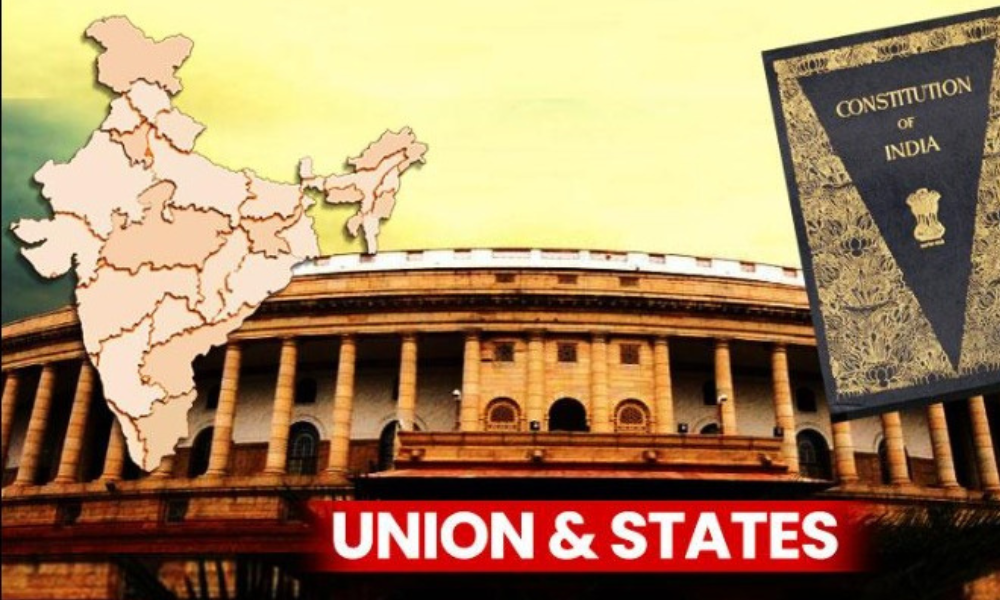
The Union of India refers to the entire country of India as a single unified entity, including:
- All States
- All Union Territories
- The Central Government What is Union of India in Constitution of India
It is the official term used in the Constitution of India to describe India as a nation governed by one central authority.
👉 In simple words:
Union of India = Whole country under one central government
📜 Constitutional Basis of Union of India
The concept of the Union of India is clearly mentioned in Article 1 of the Constitution of India:
“India, that is Bharat, shall be a Union of States.”
🔍 What does this mean?
This statement highlights an important principle:
India is not just a collection of independent states
- It is a strong, unified nation
- States exist, but they are part of one indivisible union
Unlike some countries where states have the right to separate, in India, the Union is permanent and indestructible.
⚖️ Why the Term “Union” is Used Instead of “Federation”
India is often described as a federal country, but the Constitution deliberately uses the word “Union”.
✔️ Key Reasons:
- Indestructible Unity
States cannot break away from India. - Strong Central Power
The central government has more authority than states in many matters. - Single Sovereignty
India is one nation, not a loose alliance of states.
👉 This makes India a unique federal system with unitary features.
🔑 Key Features of the Union of India
1. 🏛️ Strong Central Government
The Union government has significant powers, especially in:
- Defense
- Foreign affairs
- Currency
- National security
2. 🔄 Power to Reorganize States
The Parliament of India can:
- Create new states
- Merge states
- Change state boundaries
👉 Example: Telangana was created from Andhra Pradesh in 2014.
3. 🔒 Indestructible Union
- States cannot separate from India
- The unity of the nation is permanent
4. ⚖️ Supremacy of the Constitution
The Constitution of India is the highest law of the land:
- Both Union and States must follow it
No authority is above it
⚖️ Legal Meaning of Union of India
In legal terms, “Union of India” refers specifically to the Central Government.
Whenever a person files a case against the central government, it is filed in the name of:
👉 “Union of India”
📌Example: Ramesh vs Union of India
➝ This means Ramesh has filed a case against the Central Government
🧾 Where is the Union of India Used?
The term is commonly used in:
✔️ 1. Court Cases
- Used to represent the central government in legal proceedings
✔️2. Government Documents
- Official policies and notifications
✔️ 3. Laws and Acts Many laws mention “Union of India” as the governing authority
🔍 Difference Between Union of India and State Government
| Aspect | Union of India | State Government |
| Authority | Central Government | State-level Government |
| Scope | Entire country | Specific state |
| Powers | Defense, foreign affairs, currency | Police, health, agriculture |
| Legal Identity | “Union of India” | “State of Telangana”, etc. |
👉 Simple understanding:
- Union = National level
State = Regional level
🌍 Real-Life Examples of Union of India
🧑⚖️ Example 1: Court Case
If someone challenges a central law:
- Case is filed against Union of India
🏗️ Example 2: Government Policy
When the central government launches a scheme like:
- https://www.hyphub.com/digital-personal-data-protection-act-india-guide/Digital India
- Make in India
👉 These are initiatives of the Union of India
🛡️ Example 3: National Security
Decisions related to:
- Army
- Defense policies
👉 Handled only by the Union Government.
📚 Importance of Understanding Union of India
Understanding this concept is important because:
🎓 For Students
- Frequently asked in exams (law, polity, UPSC)
⚖️ For Legal Knowledge
- Helps understand court cases and legal terms
🌐 For General Awareness
- Gives clarity on how India functions as a nation
❗ Common Misconceptions
❌ Myth 1: Union of India = Only Central Government
✔️ Truth: It represents the entire nation, but in legal use, it refers to the central government.
❌ Myth 2: States are Independent
✔️ Truth: States are part of a single unified system
❌ Myth 3: India is a Loose Federation
✔️ Truth: India is a Union with strong central authority
🧠 Simple Summary
- The Union of India means the entire country governed as one unit
- It is defined in the Constitution of India
- It includes states, union territories, and the central government
- In legal cases, it represents the Central Government
- India is a Union of States, not a group of independent regions
✍️ Conclusion
The concept of the Union of India is fundamental to understanding how the country operates politically and legally. It reflects the idea that India is one strong, unified nation where states function as parts of a larger whole. Whether you are preparing for exams, writing legal content, or simply improving your knowledge, understanding this concept gives you a solid foundation in Indian polity and law.
Q1. What is Union of India in simple words?
It means the entire country of India under one central authority.
Q2. Why is India called a Union of States?
Because states are part of one unified nation and cannot separate.
Q3. Who represents Union of India in court?
The Central Government.
⚠️ Disclaimer
This article is for educational and informational purposes only and does not constitute legal advice.