
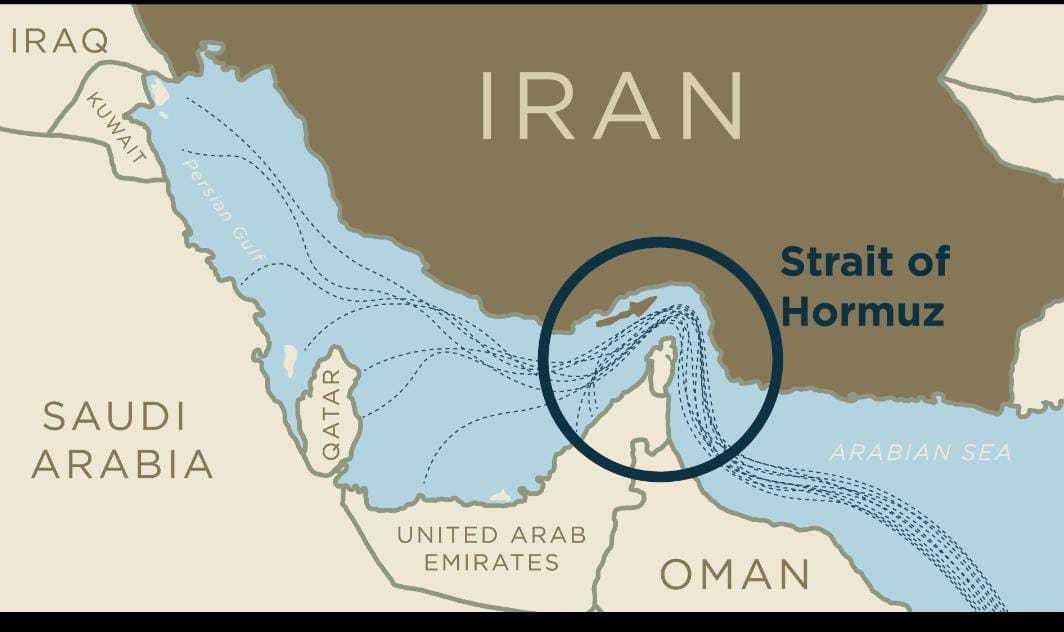
Strait of Hormuz crisis Matters to the Entire World : When people hear about the Iran–US war, they often think of missiles, airstrikes, and military tensions. But the real global impact of this conflict may not come from the battlefield—it may come from the Strait of Hormuz, one of the most important oil routes on Earth. The Strait of Hormuz is a narrow waterway located between Iran and Oman that connects the Persian Gulf to the Arabian Sea. Although it is only about 24 miles wide at its narrowest point, it carries roughly 20% of the world’s oil supply, making it the most critical energy chokepoint in the global economy. In simple terms, one out of every five barrels of oil consumed worldwide travels through this narrow passage. That means any conflict near this route can instantly affect oil prices, fuel costs, inflation, and even global economic stability.
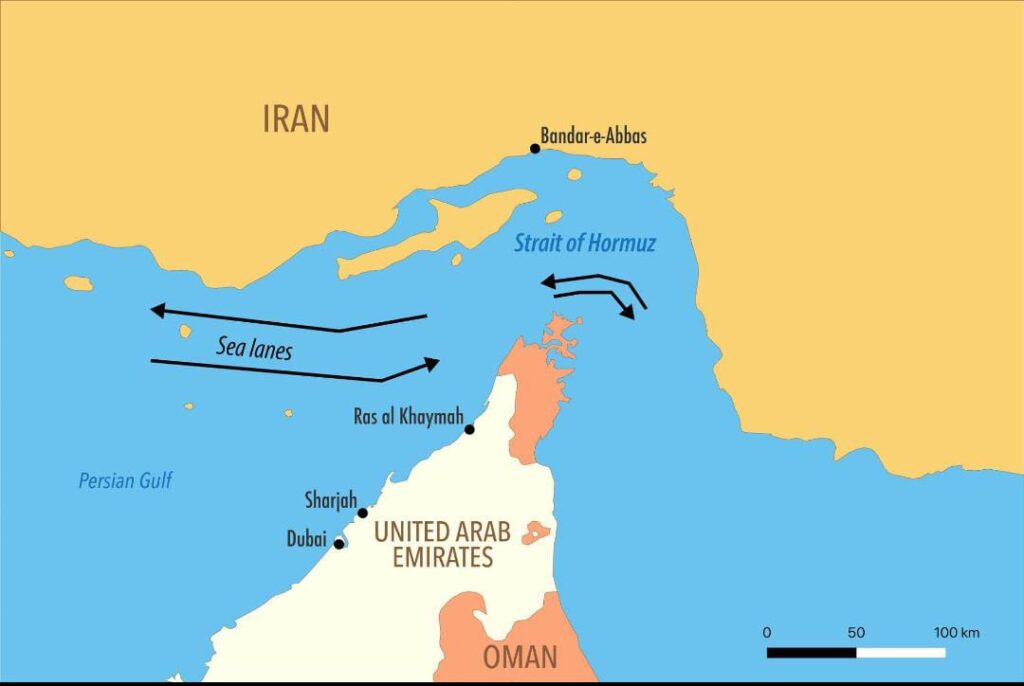
With the current Iran-US war escalating in 2026, the Strait of Hormuz has become a central concern for governments, oil markets, and financial institutions across the world.
Understanding the Strait of Hormuz crisis : The World’s Most Important Oil Route
The strategic importance of the Strait of Hormuz comes from the countries that depend on it.
Major oil exporters in the Persian Gulf—including Saudi Arabia, Iraq, Kuwait, the United Arab Emirates, and Qatar—ship most of their oil through this route before sending it to international markets.
On average, about 20–21 million barrels of oil pass through the strait every day.
These shipments supply energy to many parts of the world, including:
- China
- India
- Japan
- South Korea
- Europe
Because of this, the Strait of Hormuz is often described as the “heart of the global energy system.”
If this route is disrupted—even temporarily—the effects ripple across global markets almost immediately.
How the Iran War Triggered the Strait of Hormuz Crisis
The current crisis began as tensions escalated between Iran and the United States following military strikes and retaliatory attacks.
During the conflict, fears emerged that Iran could block or restrict shipping through the Strait of Hormuz, either through naval operations, mines, or missile threats.
Such a move would not only affect U.S. military operations but would also threaten the oil exports of several Gulf countries.
In recent developments, shipping activity in the strait dropped dramatically, with commercial traffic falling by about 94% compared with normal levels, as many vessels avoided the area due to security risks.
This sharp decline in tanker traffic sent shockwaves through global energy markets.
Why Oil Prices Rise During a Strait of Hormuz Crisis
Oil prices react very quickly to geopolitical risks.
Even the possibility of a disruption in the Strait of Hormuz Crisis can push prices upward because traders fear a shortage of supply.
Economists describe this as a “geopolitical risk premium.”
There are three main reasons oil prices rise during such crises:
1. Reduced Oil Supply
If tankers cannot pass through the strait safely, millions of barrels of oil cannot reach global markets.
A sudden drop in supply naturally pushes prices higher.
2. Increased Shipping Costs
Shipping companies charge higher rates when operating in war zones because of insurance risks and security threats through the Strait of Hormuz crisis .
These additional costs are ultimately passed on to consumers through higher fuel prices.
3. Market Panic and Speculation
Oil markets are highly sensitive to uncertainty. Even rumors of a blockade can trigger massive buying activity in oil futures markets. This speculative trading often drives prices up even before actual supply shortages occur.
Oil Prices Are Already Rising Due to the Crisis
The effects of the Strait of Hormuz crisis have already become visible in global oil markets.
In recent days, oil prices surged sharply as the conflict intensified.
- U.S. crude oil prices jumped above $90 per barrel.
- Brent crude reached nearly $93 per barrel, marking one of the largest weekly increases in recent years.
Some analysts warn that if the disruption continues, prices could climb even higher.
Financial institutions such as Goldman Sachs have suggested that due to the Strait of Hormuz crisis oil could exceed $100 per barrel if shipping through the strait does not return to normal levels soon.
In extreme scenarios involving a complete blockade, experts believe prices could even approach $120–$150 per barrel.
Impact on the Global Economy
Higher oil prices do not just affect energy markets—they influence the entire global economy.
Rising Inflation
Oil is a key input for transportation, manufacturing, and agriculture.
When oil prices increase, the cost of producing and transporting goods also rises.
This leads to inflation, meaning everyday products become more expensive.
Higher Fuel Prices
Petrol and diesel prices increase quickly when crude oil becomes more expensive.
Consumers around the world may see higher costs for:
- gasoline
- airline tickets
- shipping services
Slower Economic Growth
High energy prices can slow down economic growth by increasing costs for businesses and reducing consumer spending.
Some economists warn that prolonged disruptions in the Strait of Hormuz crisis could even trigger global recession risks.
Emerging Economies Face the Biggest Risk
Countries that depend heavily on imported oil are particularly vulnerable.
Emerging economies in Asia—including India, Thailand, and Vietnam—could face serious economic pressure if oil prices continue rising.
Higher oil costs can lead to:
- currency depreciation
- increased trade deficits
- government budget pressures
For developing countries with limited financial reserves, such shocks can destabilize entire economies.
Impact on Global Financial Markets
The Strait of Hormuz crisis is not only affecting energy markets but also financial markets.
Stock markets around the world have already shown signs of volatility as investors react to the uncertainty.
When geopolitical tensions rise, investors often move their money into safer assets such as:
- gold
- government bonds
- the U.S. dollar
Meanwhile, stock markets and emerging market currencies tend to fall due to increased risk.
This pattern is already visible in global financial markets as the Iran war intensifies.
Could the Strait of Hormuz Actually Be Closed?
Although Iran has frequently threatened to close the strait, doing so would have major consequences.
Closing the strait would also damage Iran’s own economy because the country relies on oil exports through the same route.
However, Iran could still disrupt traffic through other methods such as:
- naval patrols
- missile threats
- sea mines
- drone attacks on tankers
Even limited disruptions can significantly affect global energy markets.
Conclusion: A Small Waterway With Massive Global Impact
The Strait of Hormuz may look small on the map, but its importance to the global economy is enormous.
As the Iran-US war continues to escalate, this narrow shipping route has become one of the most critical strategic points in the world.
Because nearly 20% of global oil flows through the strait, any disruption immediately affects energy prices, inflation, and economic stability worldwide.
The current crisis shows how closely geopolitics and energy markets are connected.
Even a regional conflict can trigger global consequences—from higher fuel prices to financial market volatility.
For now, the world is watching the Strait of Hormuz carefully, knowing that the future of global oil prices may depend on what happens in this narrow stretch of water.