
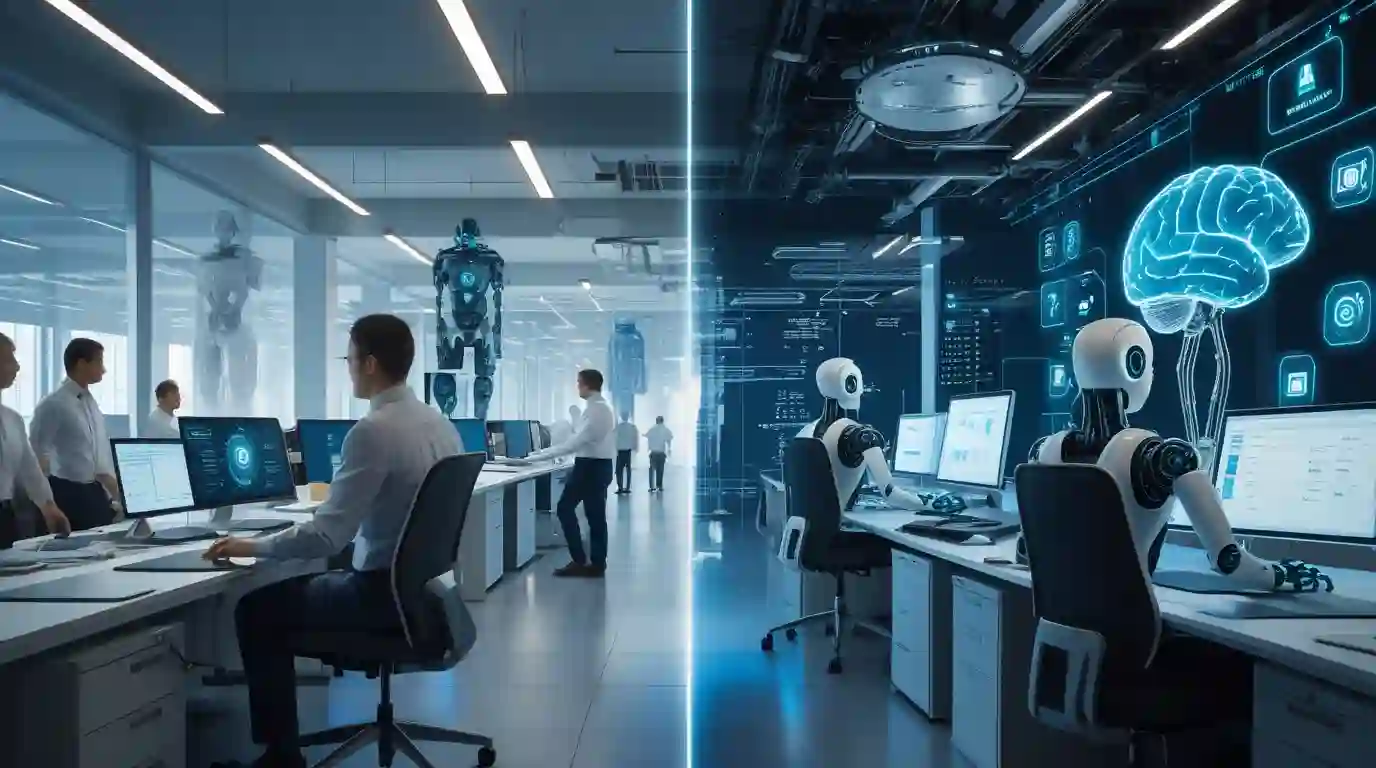
Introduction : Artificial Intelligence AI job loss 2026 is no longer a futuristic concept — it is already transforming the way businesses operate and how people work. In 2026, AI has become a powerful force across industries, bringing both opportunities and challenges. One of the most talked-about concerns today is job loss due to AI automation.
While AI is helping companies improve efficiency, reduce costs, and increase productivity, it is also replacing certain types of jobs. At the same time, it is creating new roles that require different skills to stop AI job loss 2026. This shift is not just about losing jobs — it is about changing the nature of work itself.
In this article, we will explore how AI job loss 2026 impacts jobs and businesses . In whi ch industries are most affected and how businesses and individuals can adapt to this evolving landscape.
What is AI and Why is It Growing So Fast?
Artificial Intelligence refers to machines and software systems that can perform tasks that typically require human intelligence. These include learning, decision-making, problem-solving, and even communication.
The rapid growth of AI job loss 2026 in recent years is due to several factors:
- Increased availability of data
- Advancements in machine learning and automation
- Demand for faster and more efficient business processes
- Rising competition among companies
Businesses are investing heavily in AI because it helps them save time, reduce human error, and improve decision-making.
AI job loss 2026 : What Is Really Happening ?
The idea that “AI job loss 2026” is partly true — but it is more complex than it seems.
AI is not replacing all jobs. Instead, it is automating repetitive, routine, and predictable tasks. This means that roles involving manual work or repetitive processes are more likely to be affected.
Jobs Most at Risk:
- Data entry and administrative roles
- Customer service (basic support via chatbots)
- Manufacturing and assembly line jobs
- Basic accounting and bookkeeping
- Retail cashier roles
For example, many companies now use AI-powered chatbots to handle customer queries, reducing the need for large support teams.
💼 How AI is Changing the Business World
AI is not just impacting employees — it is transforming entire business models & AI job loss 2026.
1. Increased Efficiency
Businesses can now complete tasks faster with AI tools. Processes that once took hours can now be done in minutes.
2. Cost Reduction
Companies are reducing operational costs by automating tasks that previously required human labor.
3. Better Decision-Making
AI systems analyze large amounts of data and provide insights that help businesses make smarter decisions.
4. 24/7 Operations
AI systems do not require rest, allowing businesses to operate continuously without interruptions.
As a result, companies that adopt AI are becoming more competitive in the market.
Industries Most Affected by AI job loss 2026
Not all industries are affected equally. Some sectors are experiencing rapid changes due to AI adoption.
🏭 Manufacturing
Robots and automation systems are replacing manual labor in factories, increasing production speed and accuracy.
📞 Customer Service
AI chatbots and virtual assistants are handling customer interactions, reducing the need for large call centers.
🏦 Finance and Banking
AI is being used for fraud detection, data analysis, and automated financial services.
🛒 Retail
Self-checkout systems and automated inventory management are reducing the need for traditional retail jobs.
📰 Media and Content
AI tools are now capable of generating basic content, summaries, and reports.
New Jobs Created by AI
While AI is replacing some jobs, it is also creating new opportunities. The demand for skilled professionals in AI-related fields is growing rapidly.
New Job Roles Include:
- AI and Machine Learning Engineers
- Data Analysts and Data Scientists
- Cybersecurity Experts
- AI Ethics Specialists
- Automation and Robotics Technicians
These roles require technical skills, creativity, and problem-solving abilities to stop AI job loss 2026.
Skills Needed to Survive in the AI Era
To stay relevant in the job market, individuals need to adapt and develop new skills.
Key Skills for the Future:
- Digital and technical skills
- Critical thinking and problem-solving
- Creativity and innovation
- Communication and emotional intelligence
- Continuous learning mindset
The focus is shifting from routine tasks to skills that AI cannot easily replicate.
⚖️ Legal and Ethical Concerns Around AI
The rise of AI also brings important legal and ethical challenges.
Key Issues Include:
- Job displacement and unemployment
- Data privacy and security concerns
- Bias in AI decision-making
- Lack of clear regulations
Governments and organizations are now working on policies to regulate AI and protect workers’ rights.
For example, many countries are introducing data protection laws and AI regulations to ensure responsible use of technology.
🌍 Global Impact of AI on Employment
AI is affecting job markets worldwide, but the impact varies by region.
- Developed countries are adopting AI faster, leading to quicker job transformations
- Developing countries may face challenges due to lack of infrastructure and skills
- Global competition is increasing as businesses adopt automation
This shift is creating a new global workforce dynamic, where skills matter more than location.
🔄 How Businesses Can Adapt to AI
Businesses must adopt a balanced approach to AI integration.
Strategies for Businesses:
- Invest in employee training and upskilling
- Use AI to support, not replace, human workers
- Focus on innovation and creativity
- Maintain ethical standards and transparency
Companies that combine human talent with AI technology will have a stronger advantage.
👩💼 How Individuals Can Stay Ahead
Instead of fearing AI, individuals should focus on adapting to change.
Practical Steps:
- Learn new skills regularly
- Stay updated with industry trends
- Take online courses in AI and technology
- Be flexible and open to new opportunities
The future belongs to those who are willing to learn and evolve continuously.
🔮 The Future of Jobs in an AI-Driven World
The future of work will not be about humans vs AI- it will be about humans working with AI.
Jobs will become more:
- Creative
- Strategic
- Technology-driven
Routine tasks will be automated, while humans will focus on decision-making, innovation, and leadership.
📝 Conclusion
AI is transforming jobs and businesses in ways that were unimaginable a few years ago. While it is true that some jobs are being replaced, it is equally true that new opportunities are emerging.
The key is not to resist change, but to adapt and grow with it.
Businesses must adopt AI responsibly, and individuals must focus on building future-ready skills. With the right approach, AI can become a powerful tool for progress rather than a threat.
In 2026 and beyond, success will depend on how well we balance technology with human potential.